“The eyes indicate the antiquity of the soul.”
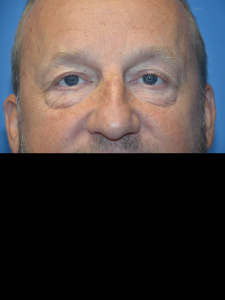
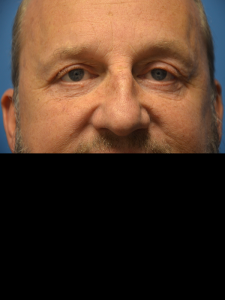
The eyes are often one of the first features people notice — and one of the first areas to show signs of aging. Heavy upper eyelids, under-eye bags, and excess skin can create a tired, sad, or older appearance, even when you feel well-rested. Eyelid surgery (blepharoplasty) is designed to rejuvenate the upper and lower eyelids by addressing these changes, helping the eyes look more refreshed, alert, and youthful. At Richmond Aesthetic Surgery, Dr. Neil J. Zemmel and Dr. Brandon Nuckles perform blepharoplasty using advanced techniques tailored to each patient’s anatomy and goals. In some cases, blepharoplasty can also improve functional concerns caused by heavy or drooping upper eyelids.
- What Is Blepharoplasty?
- Blepharoplasty Candidates
- Eyelid Surgery Types
- Blepharoplasty Consultation
- Blepharoplasty Procedure
- Eyelid Surgery Recovery
- Blepharoplasty Complications
- Eyelid Surgery Cost
What is a Blepharoplasty?
Blepharoplasty is a surgical procedure designed to address age-related changes to the upper and lower eyelids. The procedure typically involves excision of excess skin of the upper and lower eyelids, as well as correction of bulging fat of the upper and lower eyelids. In addition to addressing eyelid appearance, blepharoplasties can also address weakness or laxity of the eyelid muscles (eyelid ptosis) that are responsible for elevation of the upper eyelid. In the instance of documented eyelid dysfunction due to upper eyelid heaviness, a blepharoplasty can be considered a more functional operation that insurance companies may cover. Blepharoplasties are frequently combined with other facial rejuvenation procedures to address global signs of facial aging in a more holistic manner.
Am I a Good Candidate for Blepharoplasty?
 You may be a good candidate for blepharoplasty if you are a healthy adult and experience one or more of the following:
- Excess or wrinkled skin on the upper eyelids
- Bulging fat in the upper eyelids that creates a heavy or sleepy appearance
- Fine wrinkling of the lower eyelid skin
- Under-eye “bags” caused by bulging lower eyelid fat
- Loss of volume near the inner corner of the lower eyelids, resulting in tear troughs
Blepharoplasty may not be appropriate for patients with certain medical or eye-related conditions, including:
- Chronic dry eyes
- Ophthalmologic conditions such as glaucoma
- A history of eye surgery
- Medical conditions such as diabetes or hypothyroidism
Your plastic surgeon will perform a thorough evaluation during your consultation. A full ophthalmologic exam may be requested prior to surgery, if necessary
Am I Too Young for Blepharoplasty?
 The changes to the upper and lower eyelids that blepharoplasties address can occur at any age. The typical man or woman seeking blepharoplasty surgery is in their 40s and beyond. Patients as early as their 20s can show some bagging or skin excess that can be addressed with a blepharoplasty.
A small subset of patients in their early 20s may show signs of bulging of the lower eyelids called congenital fat herniation. This may have been present from birth and these patients often are excellent candidates for a less invasive transconjunctival blepharoplasty.
What Are the Different Types of Eyelid Surgery?
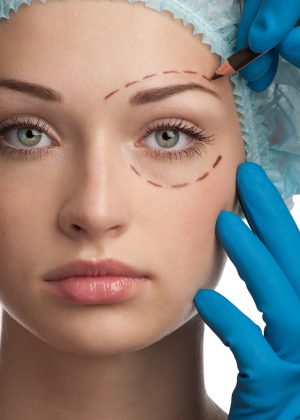 Blepharoplasties can significantly improve the appearance of the eyelids resulting in a youthful, fresher appearance. The operations are usually performed in the outpatient setting, and they can often be done under deep sedation. There are two main types of blepharoplasty to choose from based upon your individual needs and expectations:
Upper Eyelid Blepharoplasty
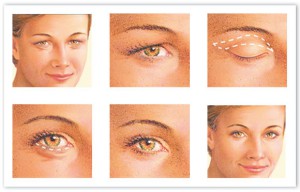
Upper eyelid blepharoplasty is performed by carefully placing an incision that follows the natural curve of the upper eyelid. This incision is designed to remove loose or excess skin and is hidden within the eyelid’s natural crease, with a small extension into a natural crow’s feet line if needed. After the extra skin is removed, bulging fat in the upper eyelid, typically located closer to the forehead, may also be reduced. This is done conservatively to avoid a hollowed or sunken appearance after surgery.
If necessary, the muscles responsible for lifting the eyelid can also be repaired during the procedure. Once the corrections are complete, the incisions are closed with sutures that usually dissolve on their own and do not require removal. Upper eyelid surgery may be performed for cosmetic reasons and, in some cases, to improve vision when sagging upper eyelid skin interferes with the visual field and the procedure is considered medically necessary.
Lower Eyelid Blepharoplasty
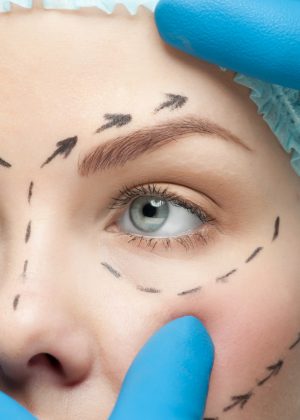 Lower eyelid blepharoplasty can be performed using one of two approaches, depending on a patient’s anatomy and rejuvenation goals. One option involves making an incision on the inside of the lower eyelid, which is completely hidden. This technique, called a transconjunctival blepharoplasty, is typically used for patients who have good skin tone and support in the lower eyelid but noticeable under-eye fat that creates a “baggy” appearance. It is most commonly recommended for younger patients who do not have significant loose skin. Because the incision is made inside the eyelid, there is no visible scar, making this approach suitable for select patients.
The more commonly used approach involves placing a small incision just below the lower lash line. This incision follows the natural curve of the lashes and may extend slightly into a natural crow’s feet line to help keep the scar well hidden. Through this incision, the underlying structures of the lower eyelid are accessed so that bulging fat pads can be addressed. Rather than simply removing the fat, it is often repositioned to fill in hollow areas beneath the eyes, such as the tear troughs, creating a smoother and more youthful contour. If needed, the ligaments that support the lower eyelid can also be tightened or repositioned to improve eyelid support.
For patients with more pronounced sagging in the cheek area, lower eyelid surgery may be combined with a cheek-lifting procedure, known as a midface lift, to achieve a more balanced and natural result. In select cases, additional supportive tightening at the outer corner of the eye may be performed to improve eyelid tone and reduce laxity.
Double Eyelid Surgery
Double eyelid surgery (sometimes referred to as “Asian blepharoplasty”) is a customized variation of upper blepharoplasty designed to create a defined eyelid crease (“double eyelid”) for patients who desire it. This procedure can create a more open, alert look, and it may also address excess puffiness. Many patients also find that applying eye makeup is easier after this procedure.
Often, blepharoplasties are combined with other facial surgical procedures, such as a facelift, brow lift, or neck lift in order to achieve a more balanced and individualized result.
What Can I Expect During My Blepharoplasty Consultation?
Your initial consultation will provide you with the opportunity to learn more about the procedure. Your surgeon will discuss your biggest concerns and then perform a thorough evaluation to include:
- Your overall facial features
- The bone structure of your cheek and eye socket
- Your vision and eye health history
- The position of your brow and eyelids
- The anatomy of your eyelids and their supporting structures
- The quality of the upper and lower eyelid skin
- The shape of the lower eyelid and cheek junction
- The intercanthal tilt of your eyelids
- The movement of your eyes
- Your tear production
Your surgeon will take a detailed ophthalmologic history. Please let them know if you have an issue with dry eyes, wear contact lenses, or have undergone Lasik surgery. It would be helpful to bring any recent records from your ophthalmologist or optometrist, if available. You will also undergo a thorough global medical history in order to identify risk factors that may affect your results. These include uncontrolled hypertension, diabetes, hypothyroidism and Grave’s disease. Please provide a list of all current medications—prescription and over-the-counter, vitamins, and herbal supplements.
After determining your candidacy for the procedure, your surgeon may recommend upper blepharoplasty, lower blepharoplasty, or a combination of the two. A detailed surgical plan will then be designed to address your specific goals for surgery. Your surgeon will review the operative plan, risks and potential complications, and realistic results that can be achieved with surgery. In cases where upper eyelid skin may be affecting your visual fields, additional non-invasive testing may be needed from your ophthalmologist or optometrist, prior to surgery. If you smoke, your surgeon may also provide specific guidance on when to stop before surgery to support safe healing and optimal results.
How Is the Blepharoplasty Procedure Performed?
On the day of eyelid surgery, you will meet your doctor before surgery to ask any final questions that you may have. You will meet a board-certified anesthesiologist and nurse anesthetist who will provide your anesthesia. Please inform the anesthesia team of any particular difficulties you may have had with prior surgeries, especially anesthesia-related nausea. You will meet our experienced intraoperative nursing staff who will care for you during surgery. Blepharoplasties can usually be performed under deep sedation; however, a general anesthesia may be used when blepharoplasties are combined with other facial plastic surgery procedures. Patients frequently choose to combine blepharoplasty with an additional procedure such as a facelift, browlift, or neck lift for a more complete rejuvenation.
During an upper blepharoplasty, the incision is typically placed along the natural crease of the eyelid, which helps conceal any scarring. This incision may also extend beyond the outer corner of the eye, in which case the incision can be concealed within a laugh line or crow’s feet. For lower blepharoplasty, an incision is typically made along the natural curve of the lower lashes just below the lash line. Oftentimes, lower blepharoplasty allows your surgeon to sculpt and reposition under-eye fatty tissue, removing any excess while also filling in hollowed areas around the eye such as the tear trough. These techniques can achieve results that look natural and youthful.
The length of surgery will be dependent on how much will be corrected in surgery. However, typical blepharoplasty procedures usually take approximately 1 to 2 hours. Surgical times will be longer when combined with other procedures. Blepharoplasties are usually outpatient procedures; however, an overnight stay for observation may be necessary if combined with another procedure, such as a brow lift or facelift. When upper and lower eyelid surgery are performed together, total surgical time may be longer based on your individualized plan.
What Is Recovery from Eyelid Surgery Like?
Immediately following surgery, you can expect moderate swelling and bruising of the eyelids and cheeks. Swelling can be controlled with elevation of your head and cool compresses over your eyes. Because of the swelling, you may have some difficulty closing your eyes completely for the first few days after surgery. To minimize the risk of dry eyes, an eye lubricant will be placed in your eyes during surgery. Most patients will be able to resume their normal daily activities within 2 to 3 days of surgery; however, you may not be socially presentable for approximately the first 7 to 10 days.
Post-operative pain is managed well with oral pain medication that will be prescribed to you prior to surgery. You will also be given a prescription for an antibiotic ointment to place along the eyelid incisions and eye drops to prevent dry eyes. The initial post-operative swelling may persist for approximately one week and should subside after 2 weeks. Because patients respond differently to surgery, swelling may persist longer in some patients. If external sutures are used, they are commonly removed around 5 to 7 days after surgery (as directed by your surgeon).
In the first few weeks following surgery, your eyelids may remain puffy, and the incisions may stay pink. These changes usually resolve in approximately 4 to 6 weeks. By 3 months post-op, the incisions are largely imperceptible. Some patients experience excess tearing or increased sensitivity to light; however, these symptoms usually resolve within about 3 to 4 weeks. Many patients feel comfortable returning to work and more public-facing activities in about a week, depending on bruising and swelling.
Dr. Zemmel is hands down the best doctor in Richmond! He is the kindest most compassionate man with amazing skill to match! Everyone at his office is wonderful!
Andrea Feits
January 16, 2018
What Are the Complications of Blepharoplasty Surgery?
In the hands of a well-trained plastic surgeon, the risk of complications with blepharoplasty is low. Some patients may experience some temporary blurry or double vision that will resolve within a week of surgery. Although bruising is common after surgery, the risk of significant bleeding is rare. Delayed bleeding following surgery may result in the formation of a blood collection under the incisions, which is called a hematoma. This occurs less than 1% of the time. Hematomas may require surgical re-exploration for drainage.
Although blepharoplasties are performed with precision to ensure symmetry of eyelid position, some patients may have some persistent asymmetry that requires additional surgical correction. Some patients may develop some raised edges at the end of the incisions that usually resolve with time. If these swellings persist, they can often be corrected with a simple office procedure under local anesthetic.
Rarely, after lower lid blepharoplasty, patients may develop some downward pulling of the margins of the lower lid. In many cases, this will resolve with gentle massaging of the lower eyelids or simple office-based maneuvers. Rarely, in approximately 2% of cases, correction requires additional surgical procedures.
How Much Does Eyelid Surgery Cost?
The average cost of an upper eyelid lift is between $6,000-$8,000, and a lower eyelid lift is between $8,000-$10,000. A combined upper and lower eyelid lift costs approximately $11,000-$12,000. Since each blepharoplasty is customized to meet the unique needs of the patient, the total price will vary. Many factors can influence the cost of blepharoplasty, including which type(s) of eyelid surgery is required as well as the overall complexity of the surgery.
When comparing the price of blepharoplasty among various doctors, make sure to ask what is included in the total cost. Hospital or operating facility fees, anesthesiologist fees, and post-operative medications or drops may not be included in the initial quote depending upon the provider. The experience of the plastic surgeon and the geographic location of the practice can also impact the total cost of blepharoplasty. We can provide you with the total cost of your custom-tailored procedure at the end of your preliminary consultation. Because treatment plans vary, your quote may also reflect whether you are having upper eyelid surgery, lower eyelid surgery, or a combined approach.
Patients who are choosing blepharoplasty may take advantage of our plastic surgery financing options. Third-party lending companies can offer financing plans with low monthly installments and little to no interest. To learn more about applying for these plans, please contact a member of our staff today.
How Can I Learn More About Blepharoplasty?
To learn more about eyelid surgery, please contact Richmond Aesthetic Surgery today. We can also schedule an appointment for you with one of our plastic surgeons for a consultation.